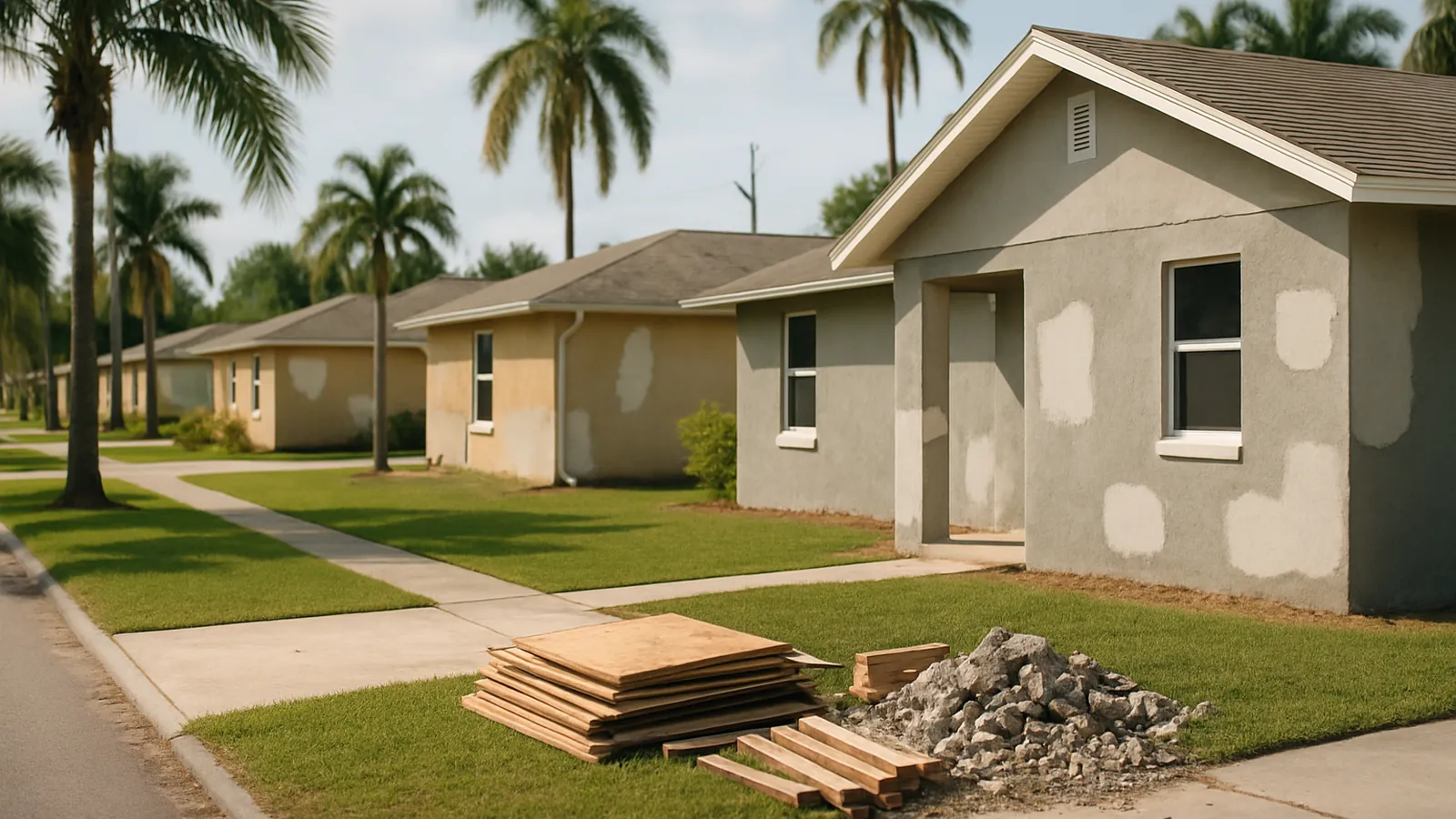
Mold removal in Fort Myers costs $500–$6,000 for most residential remediation, set by spread and whether materials must be opened. Two causes dominate here: wet-season humidity that indoor equipment isn't removing, and moisture sealed into wall cavities during post-storm reconstruction.
Below: how to tell which one you have, why rebuilt walls are their own category, and what proper remediation involves.
Two different problems that smell the same
Nearly every mold call in Lee County traces back to one of two stories, and they need different investigations:
- Ambient humidity. Growth appears on surfaces you can see — closet walls, behind furniture on an exterior wall, around supply registers, on the air handler. It develops gradually and it tracks the wet season.
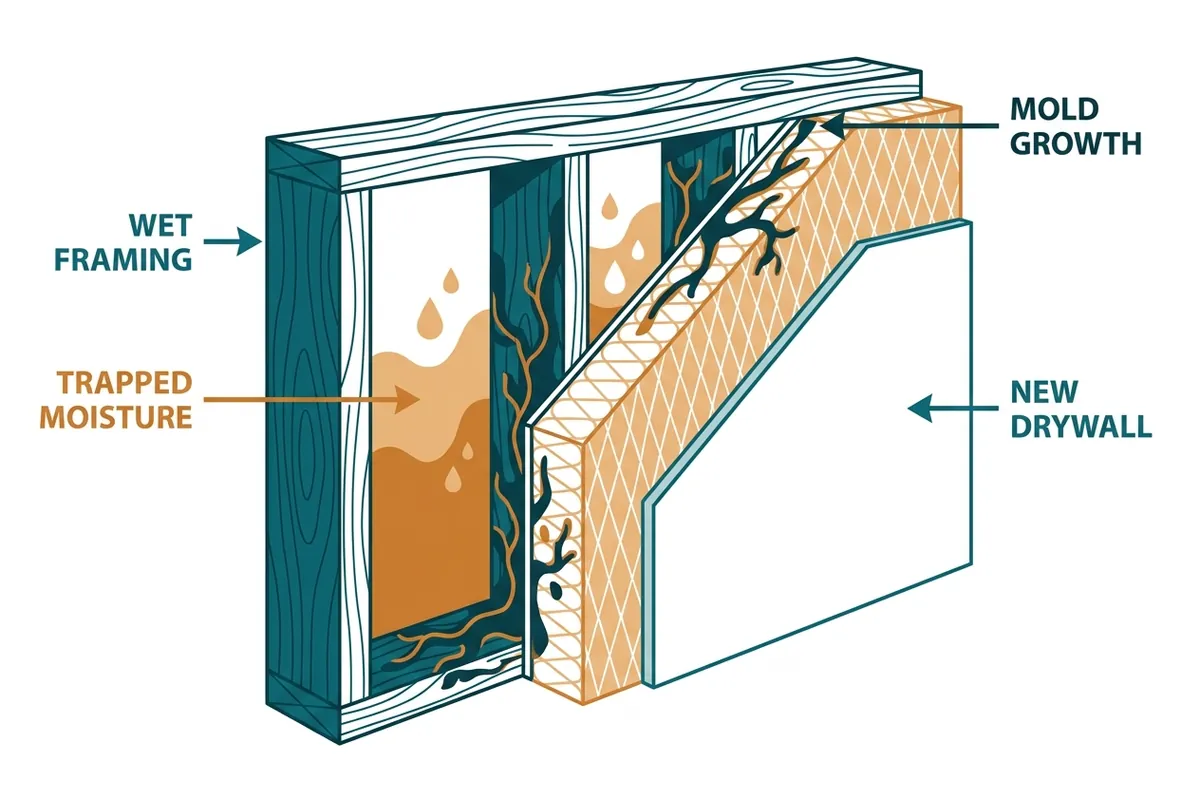
- Trapped construction moisture. Growth is inside the assembly, behind new finishes, in a room that was repaired. You smell it long before you see it, and it doesn't track the season because the water was sealed in on one specific day.
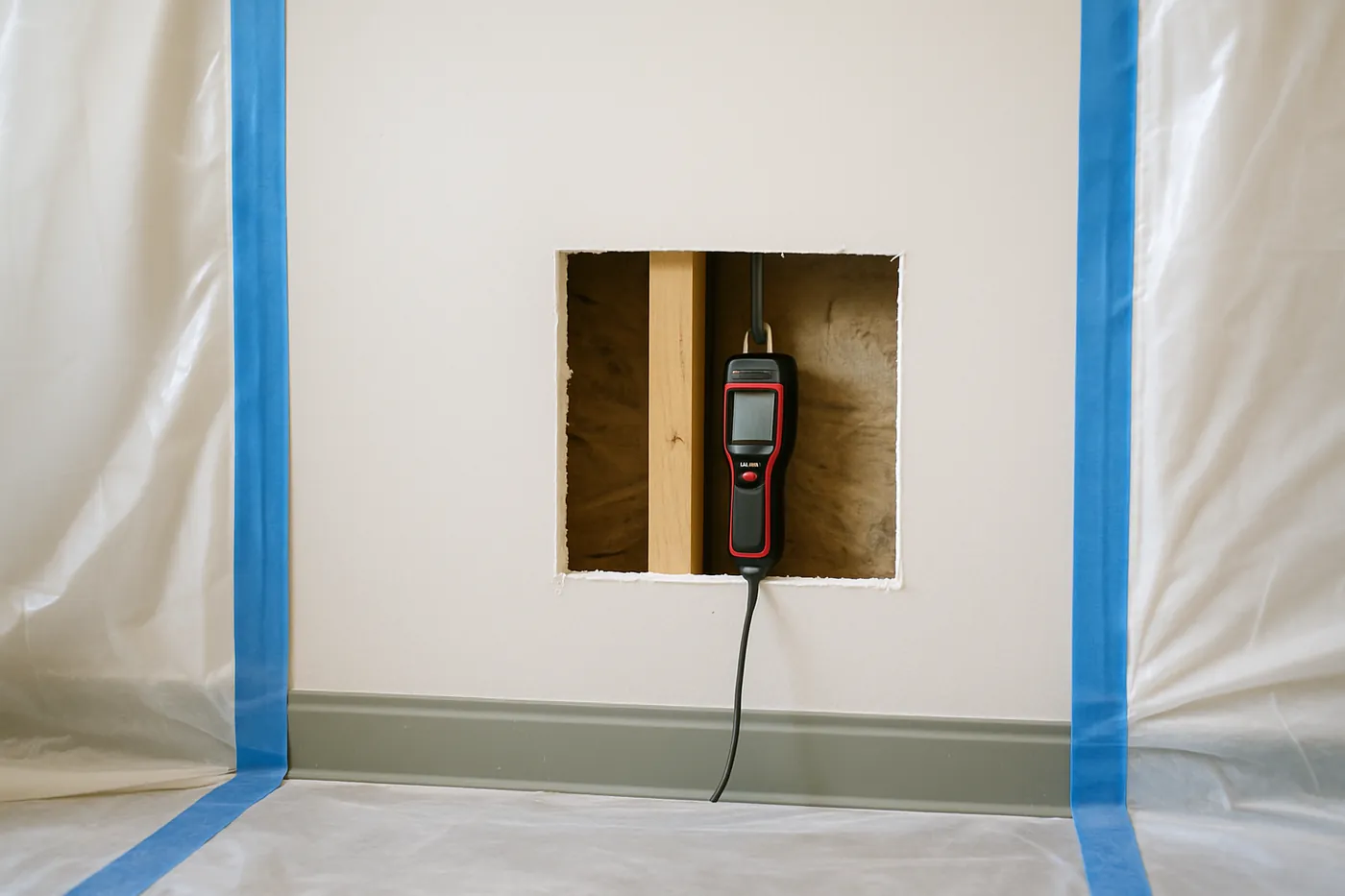
The first is diagnosed with a hygrometer and an honest look at the AC system. The second is diagnosed with moisture meters and thermal imaging on new construction, looking for readings that have no business being there. Confusing the two wastes money in both directions — a dehumidifier will not fix a wet wall cavity, and opening walls will not fix a house running at 66 percent humidity.
The rebuild is its own mold category
Lee County absorbed catastrophic storm surge and wind damage when Hurricane Ian came ashore in September 2022, and the reconstruction that followed ran at a scale and speed this region had never attempted. That produced a specific, predictable, and largely undiscussed consequence.
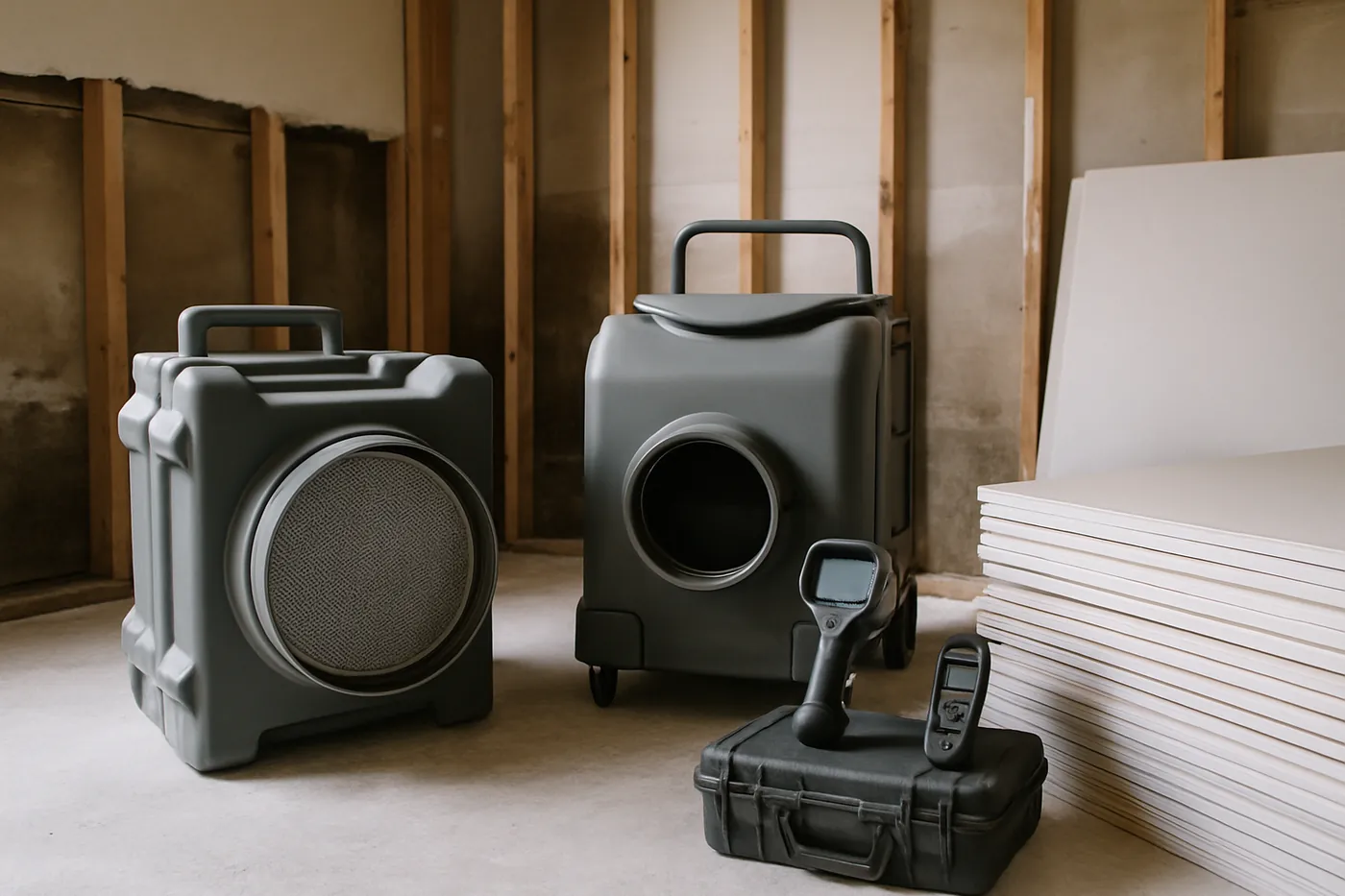
Structural drying is a metered process. Framing, sheathing, and concrete have to reach a documented dry standard — verified against unaffected material in the same building — before anything gets closed over them. That takes days, sometimes longer in humid weather, and it requires equipment sitting in a house that a family desperately wants back. Under that pressure, at that volume, with contractors stretched thin, walls got insulated and boarded over framing that had not finished drying.
The moisture had nowhere to go. It fed growth inside a sealed cavity where nobody could see it, and the result surfaces as a musty odor months or years after a repair everyone considered finished. If your house was repaired and smells wrong, you are not imagining it and it is not your housekeeping.
The service that fixes it, and what each costs
| What you have | What's driving it | The work | Typical range |
|---|---|---|---|
| Musty odor in a repaired area, staining through new paint | Moisture sealed into a rebuilt assembly | Inspection with meters and imaging | Free–$900 |
| Visible growth on walls, ceilings, or trim | Sustained indoor humidity or a specific water source | Containment and HEPA remediation | $500–$6,000 |
| Standing water, wet flooring, active intrusion | Bulk water on a 24-to-48-hour clock | Extraction and metered drying | $1,000–$8,000 |
| Musty air from the vents, growth at the air handler | Condensation in a system that is wet by design | AC and duct cleanup | $600–$3,500 |
| Dark attic sheathing, bath fan venting inside | Indoor moisture reaching the attic | Attic remediation and venting | $1,500–$6,000 |
Most homes here need one of these plus a moisture correction — and the correction is usually the cheaper half.
The humidity number that governs everything
Whatever started it, the same threshold decides whether it continues. Hold indoor relative humidity under about 60 percent and mold growth is largely arrested. Let it sit above, and given time, it isn't.
In southwest Florida that's harder than it sounds, because roughly 54 inches of annual rain arrives mostly in a June-through-September wet season when outdoor dew points stay high around the clock. Your air conditioner is the only thing removing that moisture, and it only does so while it runs. A unit sized for fast cooling — which is most of them, because bigger feels safer — satisfies the thermostat and shuts down having pulled comparatively little water from the air. The house reads 74 degrees and 66 percent humidity, feels fine, and grows something in a closet. A dehumidifier that works independently of the cooling call closes that gap, and it's frequently the cheapest line on the whole scope.
Florida licenses this trade, and splits the roles apart
Florida regulates mold work directly. The Department of Business and Professional Regulation issues separate licenses for mold assessors and mold remediators, and state law restricts one party from performing both roles on the same project.
Understand what that protects you from: if the company writing the protocol is also the company paid to carry it out, every extra square foot it finds is extra revenue. Splitting the roles removes that incentive. Whoever you end up hiring — us or a competitor — look the license up on the DBPR site first. It takes two minutes, and in a market with this much post-storm contracting activity it is the most useful two minutes you can spend.
How the inspection works
We measure instead of guessing: moisture readings on suspect surfaces and any recently rebuilt assemblies, indoor temperature and relative humidity, the air handler and its drain line, attic sheathing and bath fan terminations, and an exterior walk for intrusion points. Thermal imaging and a borescope go into a cavity when one needs assessing without demolition. You get a written scope naming the moisture source, the work, the price per line, and the timeline — free, and yours to take to any other company.
Two questions get their own deep pages: what black mold actually is — and why post-Ian rebuilt walls keep growing it — and what insurance covers, including the sublimit and the flood line 2022 taught Lee County.
Mold questions Fort Myers homeowners ask
How much does mold removal cost in Fort Myers?
Most residential remediation runs $500 to $6,000, driven by how far growth spread and whether materials have to be opened and replaced. A single wall or closet sits at the low end; growth found inside rebuilt wall cavities across several rooms sits at the high end. Every figure follows a free inspection with moisture readings. Our Mold removal cost breakdown for Fort Myers shows what drives each figure, line by line.
We had repairs done after the storm and now the house smells musty. Why?
Because a wall closed over damp framing keeps its moisture. Reconstruction across Lee County happened at enormous scale and under real time pressure, and drying a structure properly takes days of metered readings that a fast schedule doesn't always allow. Insulation and drywall installed against framing that hadn't reached a dry standard seal the moisture in — and it surfaces as odor months later.
How would I know if mold is inside a rebuilt wall?
Usually by smell before sight, because the growth is behind the finish. A musty odor concentrated in a repaired area, staining bleeding through new paint, or elevated moisture readings on new drywall are the signals. Meters and thermal imaging locate it without opening the whole wall, which is why an inspection beats guessing where to cut.
Isn't my air conditioner supposed to control the humidity?
It does it as a side effect of cooling, and only while it runs. A system sized for fast cooling reaches the thermostat setting and shuts off before it has removed much water from the air, which leaves a house that is genuinely cool and genuinely damp at the same time. That combination is common here and it is enough for mold.
What indoor humidity should I be aiming for?
Under about 60 percent relative humidity, held year-round. Below that, mold growth is largely arrested; above it, given enough time, it isn't. A hygrometer costs under $20 and that single reading resolves more uncertainty than any conversation — it's the first thing we ask people to check.
Do I need testing before removal?
Often not. EPA guidance is that visible mold with a known water source generally doesn't require testing first, because the remediation is the same regardless of species. Testing earns its cost when there's odor with no locatable source, when a health question needs documentation, when a sale or claim requires a record, or to verify a completed job.
Can one company both test and remediate?
In Florida, generally not on the same project. The state licenses mold assessors and mold remediators as separate credentials and restricts one party from performing both roles on a single job — so the firm defining the scope isn't the firm paid according to its size. Check any contractor's license through DBPR before you sign, ours included.
Will insurance pay for it?
It depends on cause. Sudden accidental water is frequently covered, and Florida policies commonly cap mold coverage at a stated dollar amount. Gradual humidity, seepage, and maintenance issues are usually excluded, and flood is a separate policy entirely. We document cause, timeline, and moisture readings in the format adjusters work from.
Mold removal across Lee, Charlotte, and Collier counties
Cape Coral · Bonita Springs · Estero · Lehigh Acres · North Fort Myers · Sanibel · Fort Myers Beach · Punta Gorda · Naples · all service areas
Get a free Fort Myers mold inspection
Tell us what you’re seeing or smelling — a musty room, staining on a wall base, discoloration in the AC closet, humidity that never drops — and we’ll schedule an inspection with moisture readings and photos. We reply the same business day.