
AC and duct mold cleanup in Fort Myers usually costs $600–$3,500, depending on whether only the air handler and coil need work or the ducts too. The evaporator coil is supposed to be wet, which makes the air handler the most frequent hiding place for mold in Southwest Florida houses.
Here's how the system grows it, and why the humidity setting matters more than the cleaning.
A wet box that distributes air through the whole house
Dehumidification happens by condensation: humid air crosses a cold evaporator coil, water condenses out of it, and drains away. That is exactly how the system is meant to work, and it is why the inside of an air handler is wet so much of the time.
Wet, dark, and dusty is a growth environment. A clogged drain pan or a condensate line without proper slope leaves standing water in the cabinet. A fouled coil supplies the dust. And unlike growth in a closet, anything living here sits upstream of every supply register. The system distributes it by design, which is why the smell shows up in multiple rooms at once.
Construction dust is its own problem
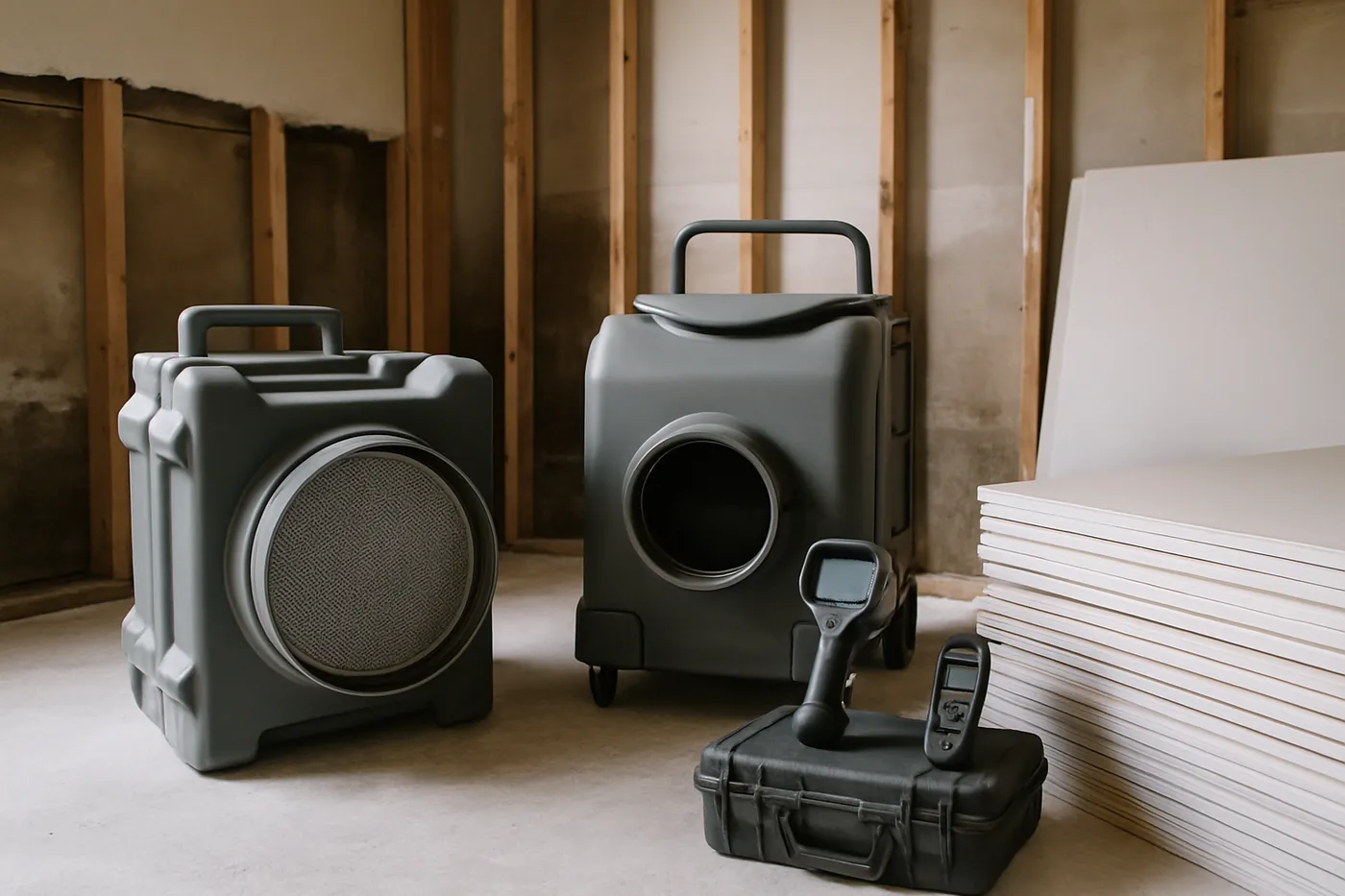
Homes that went through reconstruction carry an additional burden most owners never think about. Drywall dust, sawdust, and demolition debris get pulled into return air during the work, and unless the system was properly protected and the ducts cleaned afterward, that material stays in the ductwork and the air handler. It is an excellent food source sitting in a location that is periodically wet.
This is one of the few situations where duct cleaning is straightforwardly justified. If your system ran during or shortly after construction work, it's worth inspecting on that basis alone, and a good inspection will tell you if it's clean.
How can I tell whether the AC or the room is the source?
Watch when the smell appears. If it shows up a few seconds after the air comes on and fades once it shuts off, the source is in the equipment or the ducts, not the room you are standing in.
Signs that point to the equipment: allergy symptoms worse indoors with the AC running than outside, dark specks collecting at the supply registers, stains on the ceiling around a vent, water sitting near the air handler, and a unit that has started turning on and off in short bursts. When you notice two of these at once, the system is usually to blame.
In Lee County the cause is nearly always a clogged condensate drain, a leaky return drawing in muggy outside or attic air, or a unit too large for the house. Water standing at the air handler should be handled as urgent, not shrugged off as a summer annoyance, because a clogged drain keeps overflowing and the damage spreads into the stand and the floor.
What the cleanup covers
- Air handler cabinet, blower, and evaporator coil: cleaned, not fogged
- Drain pan and condensate line: cleared and checked for slope, since standing water restarts everything
- Return plenum and filter housing: commonly skipped and commonly contaminated
- Ductwork where inspection shows actual contamination or documented construction exposure
- Insulated flex duct assessed for replacement where the interior lining is affected, because lined duct can't always be cleaned successfully
Cool and damp: the failure mode nobody names
Your air conditioner removes moisture only while it runs. A correctly sized unit runs long, steady cycles and pulls a great deal of water from the air. An oversized unit cools quickly, satisfies the thermostat, and shuts down having removed much less.
The result is a house at 74 degrees and 66 percent relative humidity. It feels fine, so nobody looks into it, yet it sits above the roughly 60 percent level below which mold mostly stops growing. The cure is often the cheapest item in the scope. It might be a dehumidifier that runs whether or not the AC is cooling, a humidistat, or thermostat settings that favor longer cycles, and that item decides whether the remediation you paid for stays finished.
What is the system telling you?
In Fort Myers the air conditioner runs ten months a year, which makes it both the humidity control and (when something is wrong inside it) the distribution system for the problem.
| Situation | What it means | The local pattern |
|---|---|---|
| Smell arrives on start-up | It travels with the air, so the unit or a duct | With the AC running most of the year, the start-up odor repeats many times a day and is easy to pin down |
| Smell constant, system off | The room, not the machine. Find the moisture source | With the system almost always on, a constant smell usually still implicates the ducts |
| Dark specks at supply registers | Mold past the coil, usually in a duct or register box | Summer condensation feeds the register boxes and flex duct above the ceiling |
| Water standing at the handler | A blocked condensate line: urgent, not seasonal | Standing water at the handler in this climate can flood a closet in a weekend |
Equipment sized after Ian-era rebuilds is sometimes generous for the house it serves; a system that satisfies the thermostat too quickly leaves the humidity for the ducts to wear.
AC and duct questions, straight answers
Can mold grow inside my air conditioner?
It is one of the likeliest spots in a Florida home. The coil stays wet on purpose, since condensing water is how the AC dries the air, and it sits in a dark cabinet that blows air through every room, with dust to feed on. So a musty odor coming from the vents deserves more attention than one confined to a single room.
How do I tell if the smell is the AC?
The pattern tells you. When the smell starts or gets stronger within a minute of the AC kicking on, comes out of the supply registers, and turns up in several rooms rather than just one, the system is the likely cause. A single musty room is usually that room, not the equipment.
Is duct cleaning worth paying for?
Only when there is a reason. Cleaning ducts that show no contamination has little proven benefit, and the EPA does not recommend it as routine upkeep. Cleaning after confirmed mold, water getting in, or heavy rebuild dust, which applies to many Lee County homes since Ian, is a different case and makes sense.
Our house is cool but feels damp. What's wrong?
Cooling and dehumidifying are separate outcomes, and the second only happens while the system runs. An oversized unit hits the setpoint fast and shuts off having removed little moisture, leaving 74 degrees at 66 percent humidity. It feels fine and it's above the threshold where growth is arrested.
Would a dehumidifier solve it?
Often, and it is usually the least expensive fix in the scope. A portable or whole-house dehumidifier pulls moisture out whether or not the AC is cooling, which fills the gap an oversized unit leaves behind. The goal is indoor relative humidity below about 60 percent in every season.
Get a Fort Myers mold inspection
Tell us what you’re seeing or smelling: a musty room, staining on a wall base, discoloration in the AC closet, humidity that never drops, and we’ll pass it to one independent local specialist who works in Fort Myers. That specialist will call you back about an inspection.