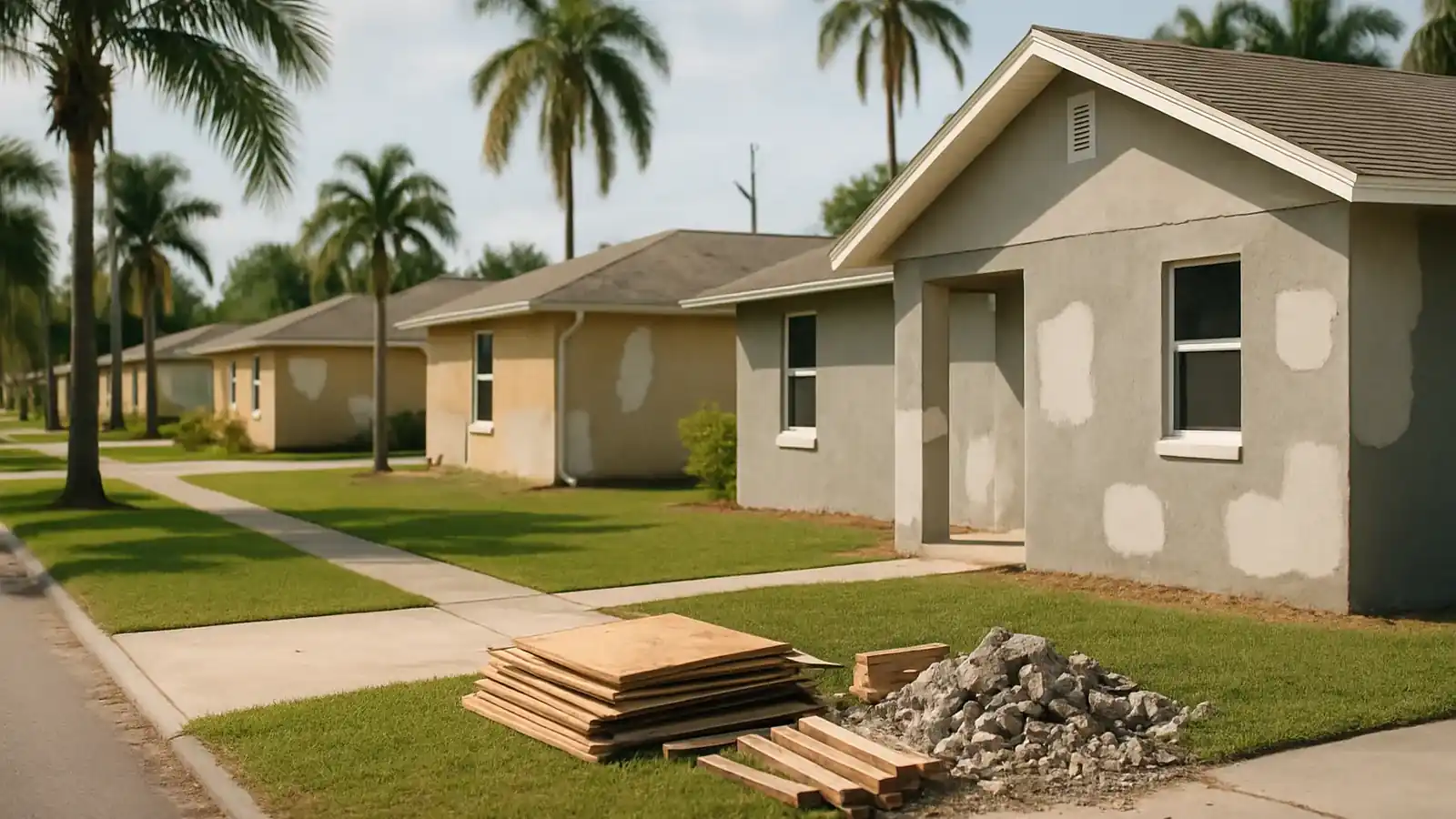
Mold remediation in Fort Myers usually costs $500–$6,000 per home, depending on the area involved and whether materials must be removed. The work means sealing off the area, physically taking the mold out, and HEPA filtering the air, then fixing the moisture, which in Lee County is usually either everyday humidity or water trapped inside a wall rebuilt after a storm.
Here's what proper remediation involves, and what's different about opening a wall that was already repaired.
The standard, in the order it happens
- Find and stop the moisture. Ambient humidity, an active leak, or water trapped during reconstruction. Nothing else matters until this is identified.
- Contain the area. Plastic walls and negative air pressure keep the cleanup from spreading spores to other rooms.
- Remove what can't be cleaned. Soft materials with mold in them are taken out, and hard surfaces are cleaned.
- HEPA-filter and clean. Air scrubbers run during and after the work, and surfaces get HEPA vacuuming and a wipe-down.
- Dry to a measured target. Meters decide when materials are ready to be closed, not the calendar.
- Rebuild. Only once the readings allow it.
Removal, not treatment
This is what separates genuine remediation from a costly imitation. The EPA is clear that the job means physically removing the mold and the porous material it grew into. Because mold doesn't have to be alive to cause a problem, killing it and leaving it in place doesn't complete anything.
That means a company offering to fog the house, spray an antimicrobial, or run an ozone machine instead of opening up the affected wall is selling something that will not fix the problem. Those tools have a few proper uses on surfaces already cleaned, but none of them substitutes for removal, and a bid built around them deserves a hard look.
Opening a wall that was already repaired once
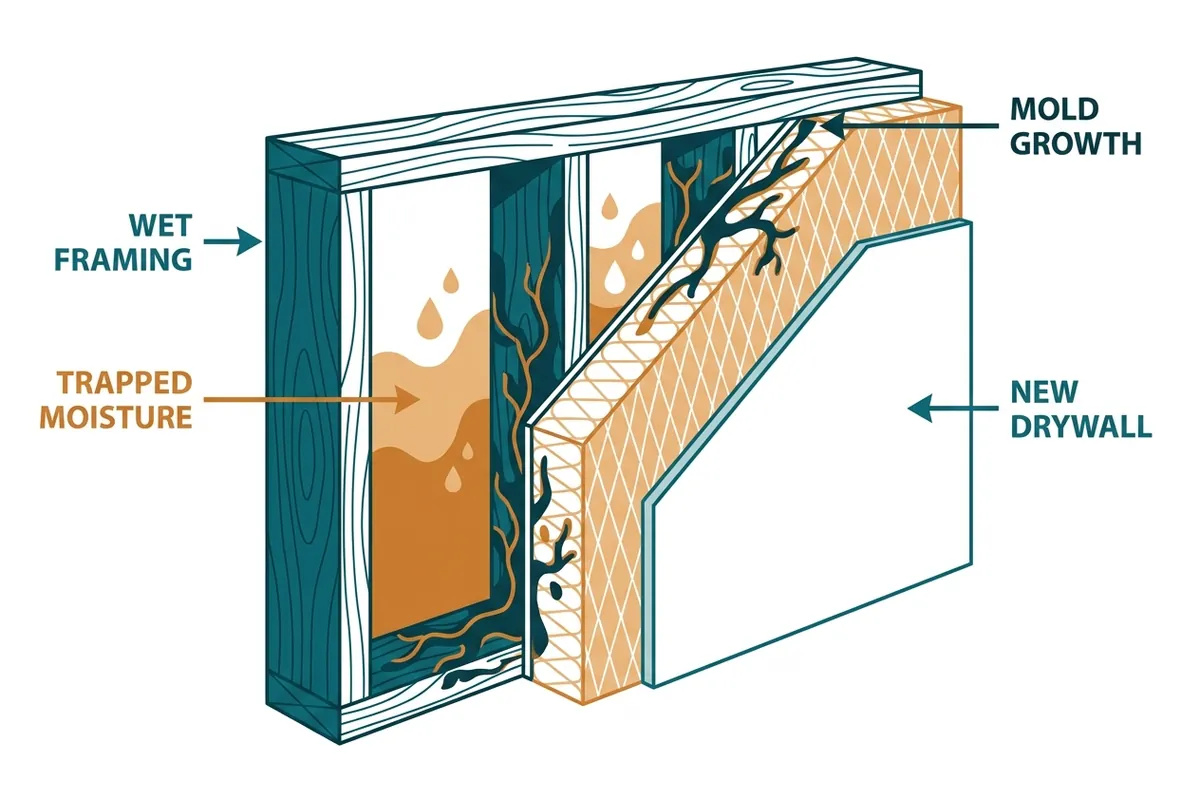
This is the situation this market produces more than any other, and it deserves its own approach. When growth is inside an assembly that was rebuilt after storm damage, the homeowner is being asked to undo work they already paid for, sometimes work they fought to get scheduled. A good remediator takes that seriously in three ways.
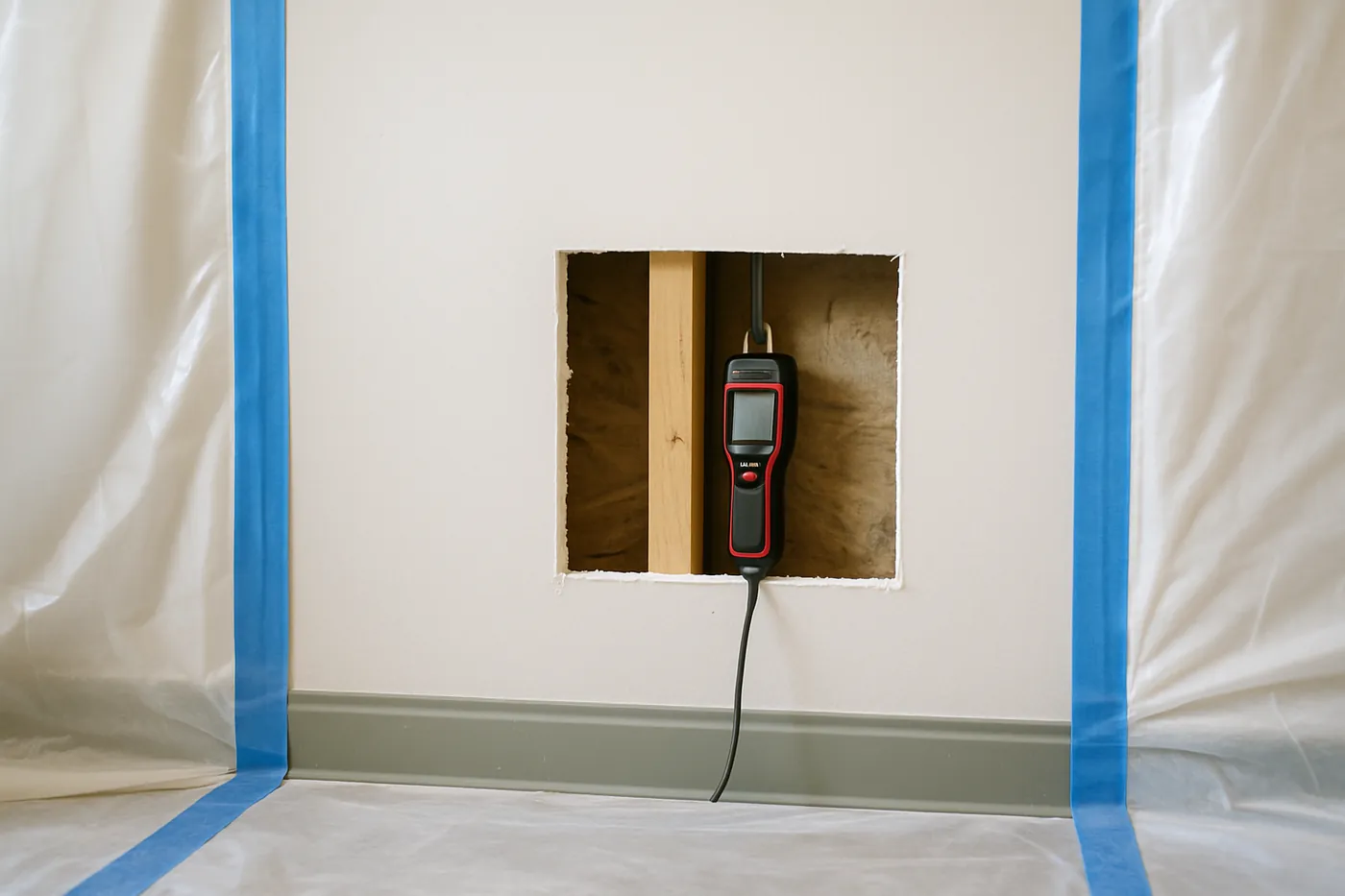
First, they locate before they open. Moisture meters and thermal imaging define the wet area, so the cut is targeted. Second, they show you the readings that justify each opening before anything is touched. Third, they document what they find: photographs of the cavity, moisture content of the framing, and the condition of the insulation, because if a rebuild was closed over wet material, that record matters to you well beyond the remediation itself.
What drives the price
- Area affected: measured, not estimated from a doorway
- Material removal and rebuild: frequently the largest line, and the usual reason a low bid grows mid-job
- Containment complexity: open plans need more barrier than closed rooms
- Access: wall cavities, chases, and under-cabinet voids cost more to reach than open surfaces
- The moisture correction: priced separately and visibly, because it's what decides whether this is a one-time job
What actually drives the price?
Post-Ian reconstruction gave Fort Myers a specific remediation pattern: growth behind new finishes, in houses that look fine, priced by what has to be reopened.
| Situation | What it means | The local multiplier |
|---|---|---|
| How far it spread | Square footage sets the containment and the labor | Spread behind fresh drywall counts even though nobody can see it yet |
| What it grew into | Drywall and insulation leave; framing cleans in place | Reconstruction-era insulation that went in over damp framing leaves again |
| Where it lives | Wall cavities and chases cost more than open surfaces | Block construction concentrates the work in furring strips and interior finishes |
| Whether the water is fixed | Cleaning while the source still leaks guarantees doing it again | If a roof or wall repair failed, the remediation has to wait for it or be repeated |
Most residential work here runs $500-$6,000 by spread. Rebuilt-then-remediated is the expensive sequence; the inspection that prevents it is the cheapest line on this page.
Remediation questions, straight answers
What does mold remediation cost in Fort Myers?
Most homes come in at $500 to $6,000, depending on the area affected, whether materials must be removed and rebuilt, and how much containment the floor plan requires. Mold on a single wall sits at the bottom of that range; mold inside rebuilt walls in several rooms sits at the top. Many local specialists don't charge for the inspection producing the number; ask when they call.
Will walls we just had repaired have to come open?
Only where the readings justify it, and a good remediator shows you the readings first. Moisture meters and thermal imaging locate the wet area so the opening is targeted rather than exploratory, often a single cut rather than a room. Nobody wants to undo a repair, and it should not be recommended on suspicion alone.
Do we need to move out during the work?
Usually not. Containment under negative air pressure is there so you can keep using the rest of the house while one area is worked on. If the area is large, includes your only bathroom, or someone at home has a breathing condition, an honest remediator will tell you that staying elsewhere is wiser.
Is fogging or chemical treatment enough?
Not in place of removal. According to the EPA, remediation means physically taking out the mold and the porous material it grew into. Dead mold can still cause trouble, so killing it where it is does not finish the work. A bid that relies on fogging or ozone instead of removal will not solve the problem.
Will it come back?
Not if the moisture source is corrected, and that line should stay visible on the scope. Growth from ambient humidity returns unless the house holds under about 60 percent relative humidity. Growth from a sealed wet cavity doesn't return once the cavity is opened, dried to a standard, and rebuilt properly.
Get a Fort Myers mold inspection
Tell us what you’re seeing or smelling: a musty room, staining on a wall base, discoloration in the AC closet, humidity that never drops, and we’ll pass it to one independent local specialist who works in Fort Myers. That specialist will call you back about an inspection.