
Attic mold removal in Fort Myers typically costs $1,500–$6,000, which pays for HEPA cleaning of the roof decking and fixing where the moisture comes from. Most often that is warm, damp air getting into the attic, through bath fans that end there, leaky ducts, or venting that is out of balance, rather than a leak in the roof.
Here's why attics here grow mold, and what a lasting correction includes.
Attics are where indoor moisture goes to condense
In Southwest Florida the attic is a hot space with no air conditioning, sitting right on top of a cooled house. Damp air finds its way up through every gap: the attic hatch, can lights, holes for pipes and wires, and leaky supply and return ducts. Once up there, it meets sheathing that at certain hours is the coolest surface available.
Then there is the most direct route: a bath fan whose duct terminates in the attic instead of going out through the roof or soffit. The fan does just what it should, pulling steam out of the bathroom, and then dumps it on the plywood several times a day. It's among the most common attic mold causes and among the cheapest to correct.
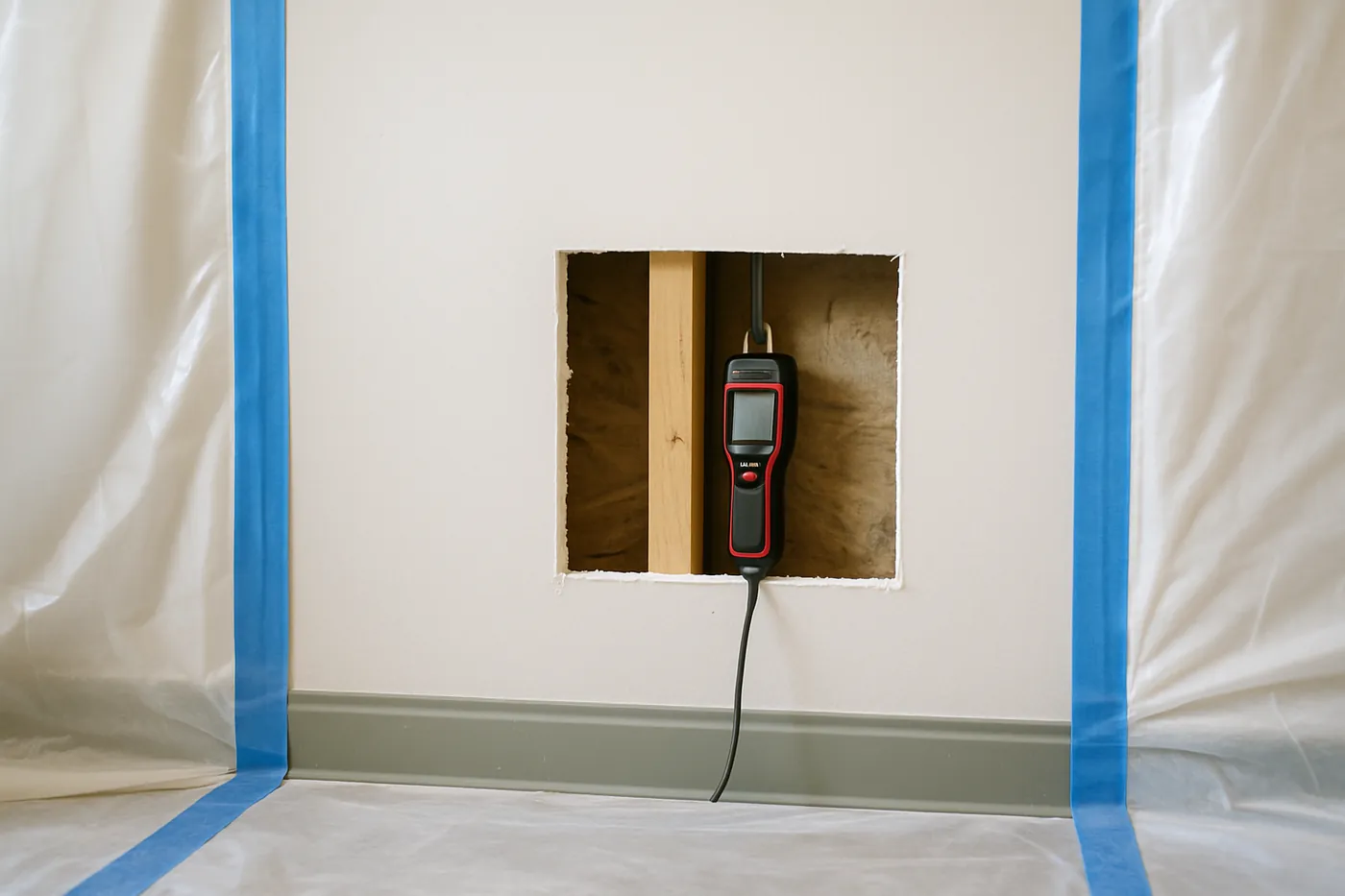
What the work includes
- HEPA vacuuming and abrasive cleaning of affected sheathing and framing: removal, not treatment
- Containment at the access point, so nothing disturbed in the attic falls into the rooms below
- Insulation removal where contaminated or repeatedly wetted
- Bath and dryer duct correction: terminating outside the building, verified
- Air sealing at the ceiling plane: the hatch, holes, and light fixtures, cutting off the damp air rising from the house
- Ventilation balance: soffit intake checked against exhaust rather than assumed
Roof work and what it changed
A great many roofs in this region have been replaced or repaired in recent years, and that's worth raising during an attic inspection. New roofing can change ventilation characteristics, and soffit vents get blocked by insulation or debris during work more often than anyone intends. Where an attic started showing moisture problems after roof work, the ventilation balance is the first thing to check, and the correction is frequently clearing intake rather than adding exhaust.
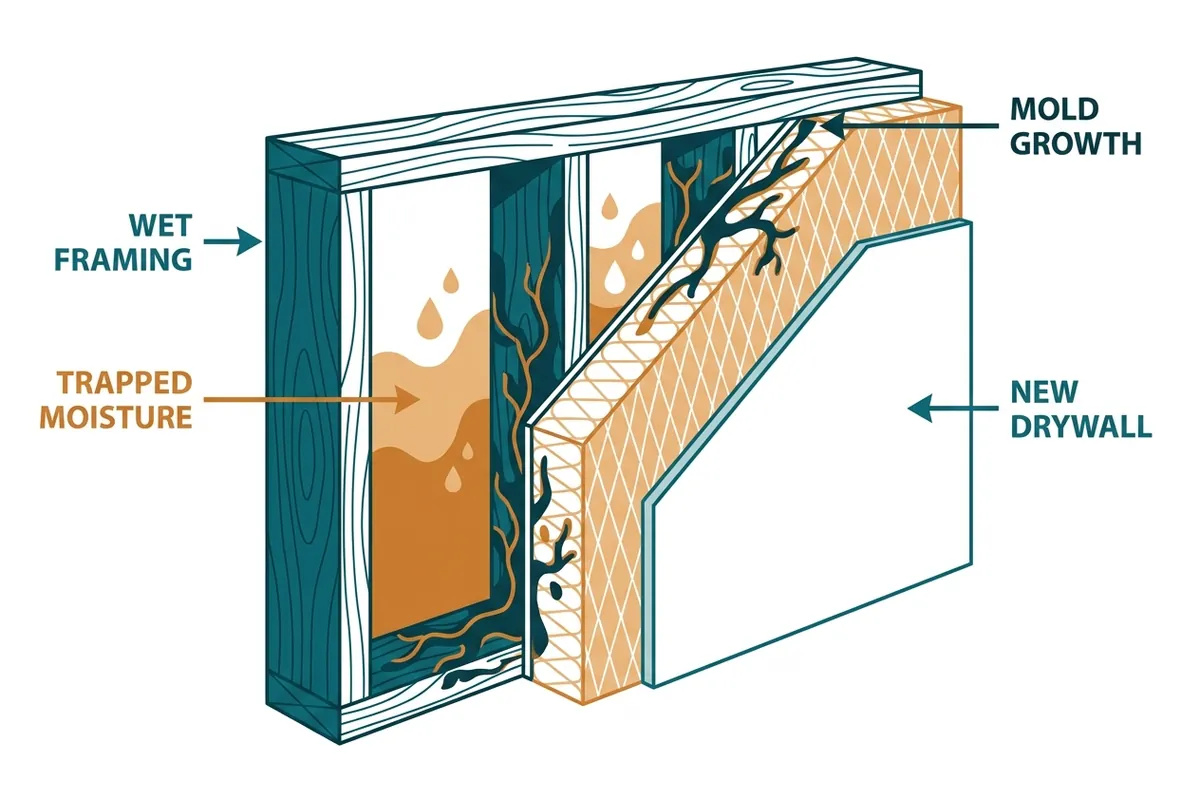
Adding vents is not automatically the answer
Attic venting is a balance: air comes in low at the soffits and leaves high near the ridge. Add exhaust vents without enough intake, or let insulation block the soffits, and the attic starts pulling its replacement air from the cooled house below, carrying indoor humidity up with it. It looks like a fix while making things worse. A good scope states what is actually unbalanced and why, and the fix is often clearing intake and sealing the ceiling plane at a fraction of the cost of new roof vents.
What put the mold up there?
A Fort Myers attic spends the wet season hot on top and cold underneath, with the AC ducts running through the hottest air in the house. That geometry is most of the story.
| Situation | What it means | The local version |
|---|---|---|
| A roof penetration | Staining tracks a fastener, a valley, or one flashing | Post-Ian roofs are younger than the metro average, but a missed fastener still leaks |
| Sweating ductwork | Growth clusters along duct runs in a hot attic | The signature local case: cold ducts sweating in a 130-degree attic all summer |
| Blocked intake vents | An even dusting across the sheathing, worst at the eaves | Soffits blocked by blown insulation stop the one airflow the attic design assumed |
| A storm-opened envelope | One bay, datable to a storm or a fallen limb | Storm damage here is datable to a name, and so is the staining it caused |
If the growth maps to the duct runs rather than the roof planes, the fix is insulation and sealing on the ducts, not roof work. Getting that diagnosis right halves the bill.
Attic questions, straight answers
Why is my attic sheathing dark near the edges?
That's where warm moist air meets the coolest surface. Discoloration concentrated near the eaves usually means moisture is reaching the attic and ventilation isn't clearing it: commonly from bath fans terminating inside, duct leakage, or an unsealed attic hatch. The moisture path diagnoses it; color doesn't.
Does a bath fan venting into the attic really cause this?
It is one of the leading causes. The fan does its work, clearing steam from the bathroom, but if its duct stops in the attic rather than exiting through the roof or soffit, that steam lands on the decking several times daily. Rerouting the duct outdoors is cheap and removes the source.
Can sheathing be cleaned, or does it get replaced?
Most of the time it is cleaned. Plywood and OSB with mold on the surface usually come clean with HEPA vacuuming and abrasive cleaning. Replacing it makes sense only where boards stayed wet long enough to separate or lose strength, and a careful specialist will photograph that and show you rather than declare it from the hatch.
Should we add more vents?
Sometimes, though added vents can also make it worse. Attic venting depends on a balance of soffit intake and high exhaust, and extra exhaust without matching intake can suck cooled air out of the house and draw more moisture up. Soffit vents choked with insulation are very common, and clearing them costs less than installing new vents.
Is attic mold a health risk to the living space?
Usually less than you might fear, since attics tend to sit at lower pressure than the rooms below, so air generally moves upward, not down. That is a reason to stay calm, not a reason to ignore it. The moisture behind it is also degrading sheathing and insulation performance.
Get a Fort Myers mold inspection
Tell us what you’re seeing or smelling: a musty room, staining on a wall base, discoloration in the AC closet, humidity that never drops, and we’ll pass it to one independent local specialist who works in Fort Myers. That specialist will call you back about an inspection.