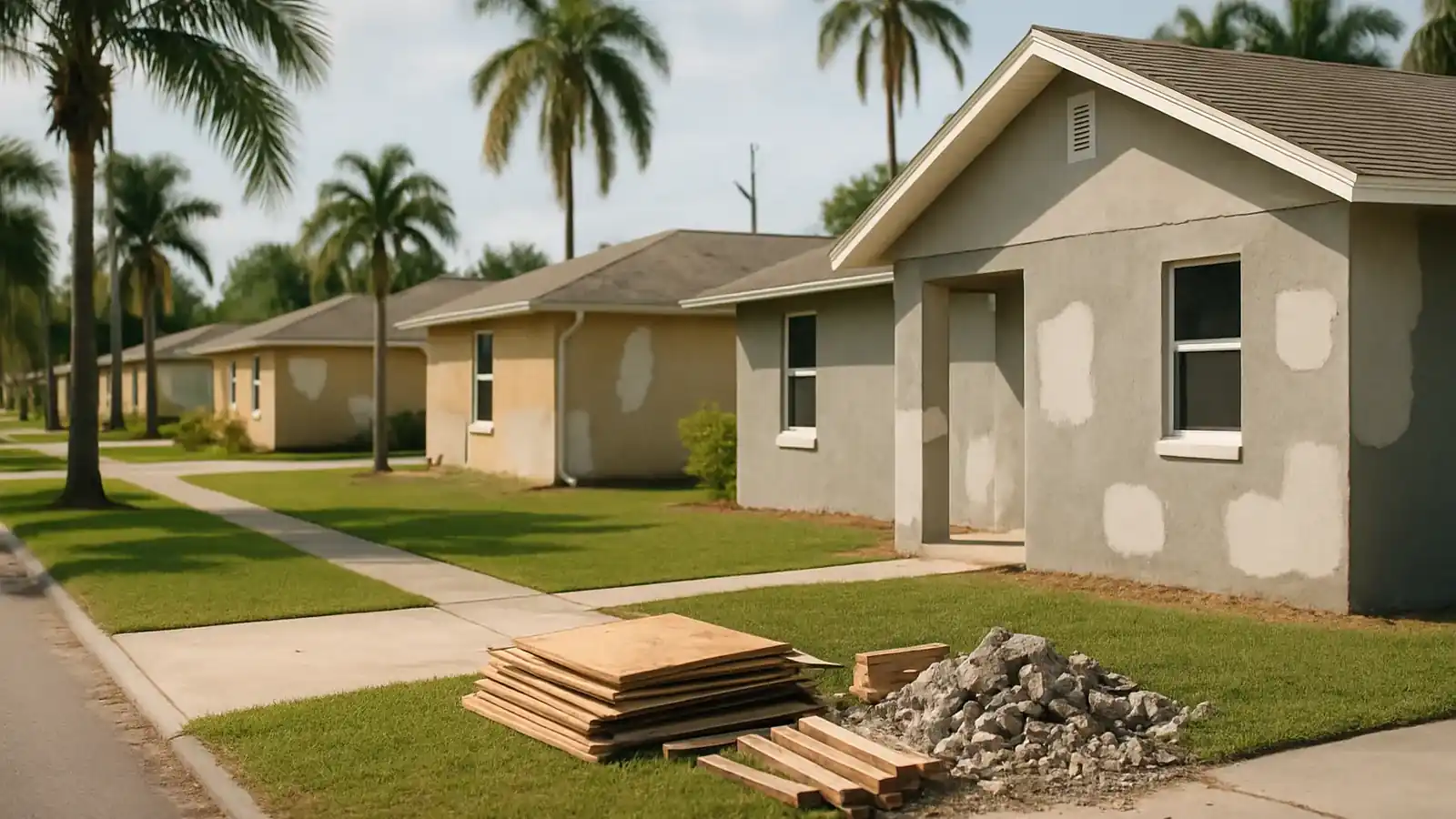
Black mold removal in Fort Myers runs $500–$6,000 for most homes: contained single-room jobs $2,000–$6,000. Removal practice follows extent and moisture source, not species; here the sources are wet-season humidity, AC that cools without drying, and post-Ian reconstruction that sealed damp into rebuilt walls.
What the color means, the reconstruction-moisture problem, and removal that lasts.
What “black mold” means, and what its color cannot tell you
People using the phrase usually mean Stachybotrys chartarum, a dark mold that grows slowly on paper-based materials that stay wet, such as drywall facing and soaked framing. Plenty of everyday molds are dark too, though, and the EPA's remediation guidance turns on extent and moisture, not species: significant indoor growth is taken out and its water source fixed, whatever the lab calls it. Species testing has real uses (medical questions, disputes, clearance) and testing runs $300–$900 when one of them applies. What dark growth reliably tells you in Lee County is simpler: something has stayed wet, and in this climate the candidate list is short.
The post-Ian wall problem
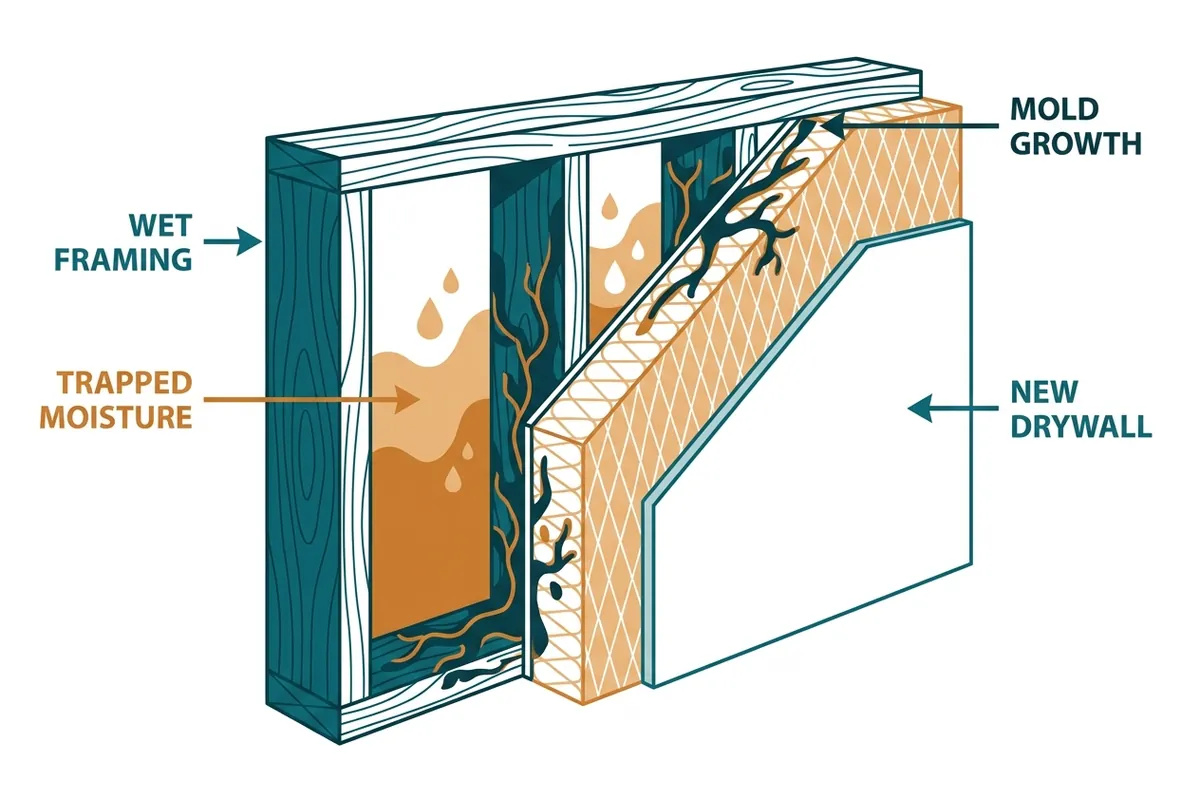
Lee County’s reconstruction after Hurricane Ian was fast by necessity, and speed had a moisture cost. Block and framing that took surge or rain and never fully dried before new drywall sealed it in has been feeding colonies from inside walls since, announcing itself as staining, odor, or allergy symptoms at rebuilt sections with no new leak to blame. The diagnosis is moisture mapping (meter readings through the rebuilt zones) before any removal is scoped, because opening the wrong wall is expensive and opening no wall leaves the colony fed. Storm-related water events still start at dry-out; the wall-cavity cases are their slower aftermath.
Cleanup or remediation: the honest line
| Situation | Reasonable response | Typical cost |
|---|---|---|
| A small spot on tile or block | Clean it yourself and keep an eye on it | Supplies |
| Mold on drywall or baseboards | Cut it out: growth in porous material comes back through cleaners | $500–$2,000 small scope |
| A room or an AC air path | Contained remediation, HEPA, negative air. See AC cleanup | $2,000–$6,000 |
| Rebuilt wall with returning staining | Moisture-map, open, remediate, dry, close | Priced by wall area opened |
| New water from a storm or leak | Dry-out first, then judge what is left | $600–$3,500 dry-outs |
Removal that holds on the Gulf Coast
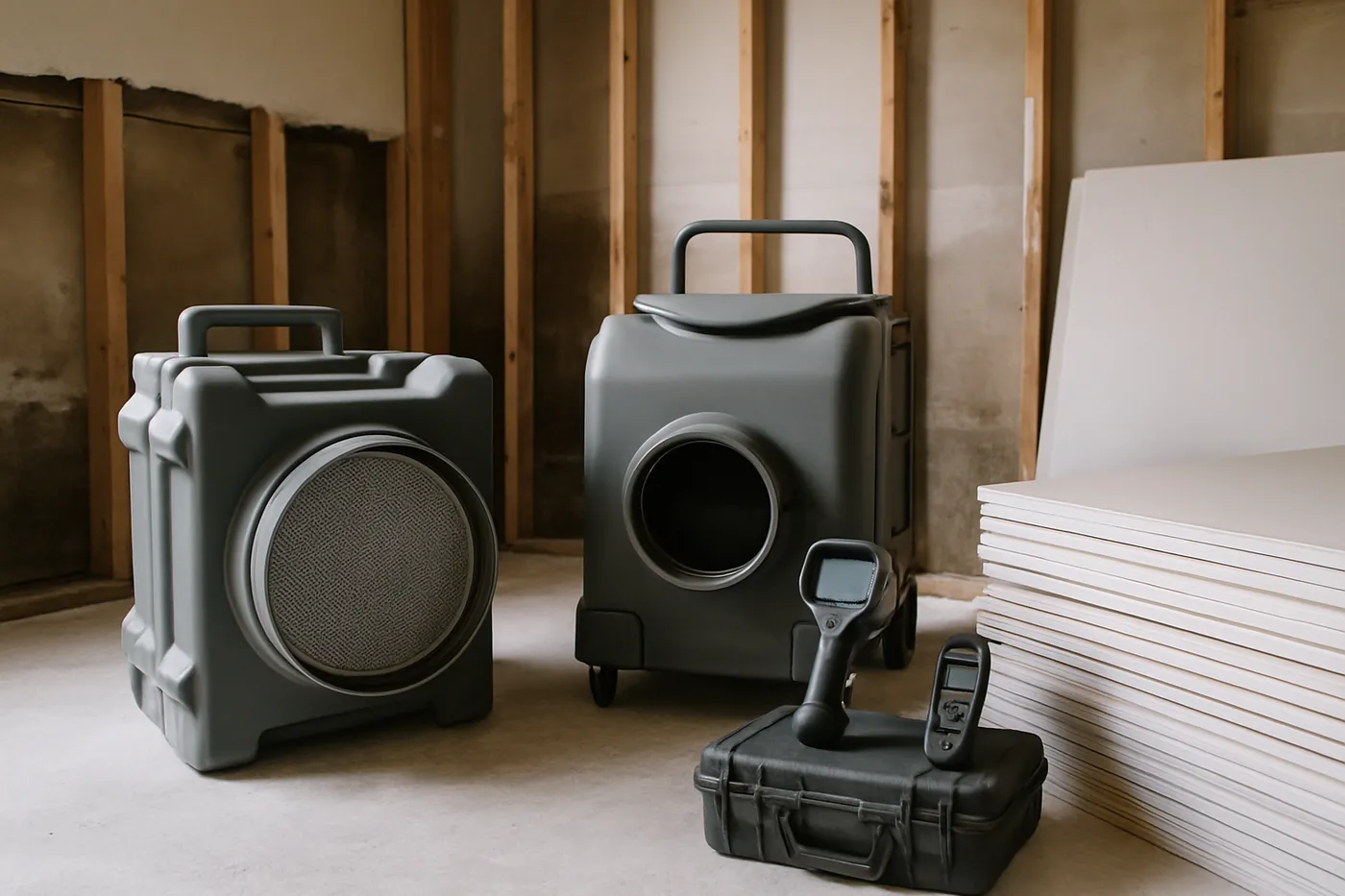
Seal the area before touching anything, run HEPA filtration the whole time, remove porous material with growth in it, and clean the concrete block and framing rather than tearing them out; then fix the moisture source, which decides whether it comes back. Wet-season humidity needs the AC answer (cooling without dehumidifying is this coast’s quiet mold engine); reconstruction damp needs drying before the wall closes again; leaks need plumbing before paint. Florida licenses mold assessors and remediators through DBPR. Verify any contractor’s license before hiring, including the specialist who calls you back, and weigh every bid by whether it names the moisture source. The cost guide prices each scope line by line.
What clearance testing actually proves
Clearing the visible mold is not the finish line. The job is done when an independent test shows the air in the treated area matches a part of the house that was never affected. That clearance check confirms three things: the area looks clean and is dry, the containment worked, and indoor spore counts are no higher than an outdoor sample collected the same day. People often forget the outdoor sample. Spores are always present outside, especially in a Gulf Coast summer, so “zero” is not a real goal and anyone guaranteeing it is making a pitch. Have someone other than the remover take the samples, and keep the report for a future buyer, adjuster, or landlord.
Black mold questions, straight answers
Is black mold more dangerous than other molds?
Color does not determine the risk. 'Black mold' usually means Stachybotrys, yet many ordinary molds are dark too, and the EPA bases remediation on how far growth has spread and where the water comes from, not on the species. Substantial indoor growth gets removed and its water source fixed regardless of the colony's name; testing supplies the name when a doctor or dispute needs it.
Why does dark growth keep appearing in rebuilt walls?
Reconstruction moisture. After Ian, Lee County rebuilt fast, and block or framing that never fully dried before drywall closed it in has been feeding colonies from inside the wall ever since. The signature: staining or odor returning at a rebuilt section with no new leak. That's a moisture-mapping job before it's a removal job.
Can I just bleach it off the wall?
On a hard, non-porous surface (tile, a shower corner) household cleanup is fine. On drywall or wood, bleach wets the material, kills the surface, and leaves roots in a damp substrate: the regrowth cycle. Growth beyond a few square feet, inside a wall cavity, or returning after cleaning is containment-and-removal work, not a spray bottle.
What does removal involve in a block-on-slab house?
Containment with negative air, HEPA filtration, removal of colonized drywall and trim (block itself usually cleans rather than demolishes, one advantage of concrete construction) then moisture correction: the AC humidity problem, the leak, or the sealed-in reconstruction damp. Florida licenses mold remediators through DBPR; verify any contractor's license, including the specialist who calls you back.
What does black mold removal cost in Fort Myers?
Most residential remediation runs $500 to $6,000 by spread: contained single-room jobs commonly $2,000-$6,000, testing $300-$900 where a dispute or clearance needs numbers. Species doesn't move the price; extent and access do. Wall-cavity work in rebuilt sections prices by how much finished material has to open.
Get a Fort Myers mold inspection
Tell us what you’re seeing or smelling: a musty room, staining on a wall base, discoloration in the AC closet, humidity that never drops, and we’ll pass it to one independent local specialist who works in Fort Myers. That specialist will call you back about an inspection.