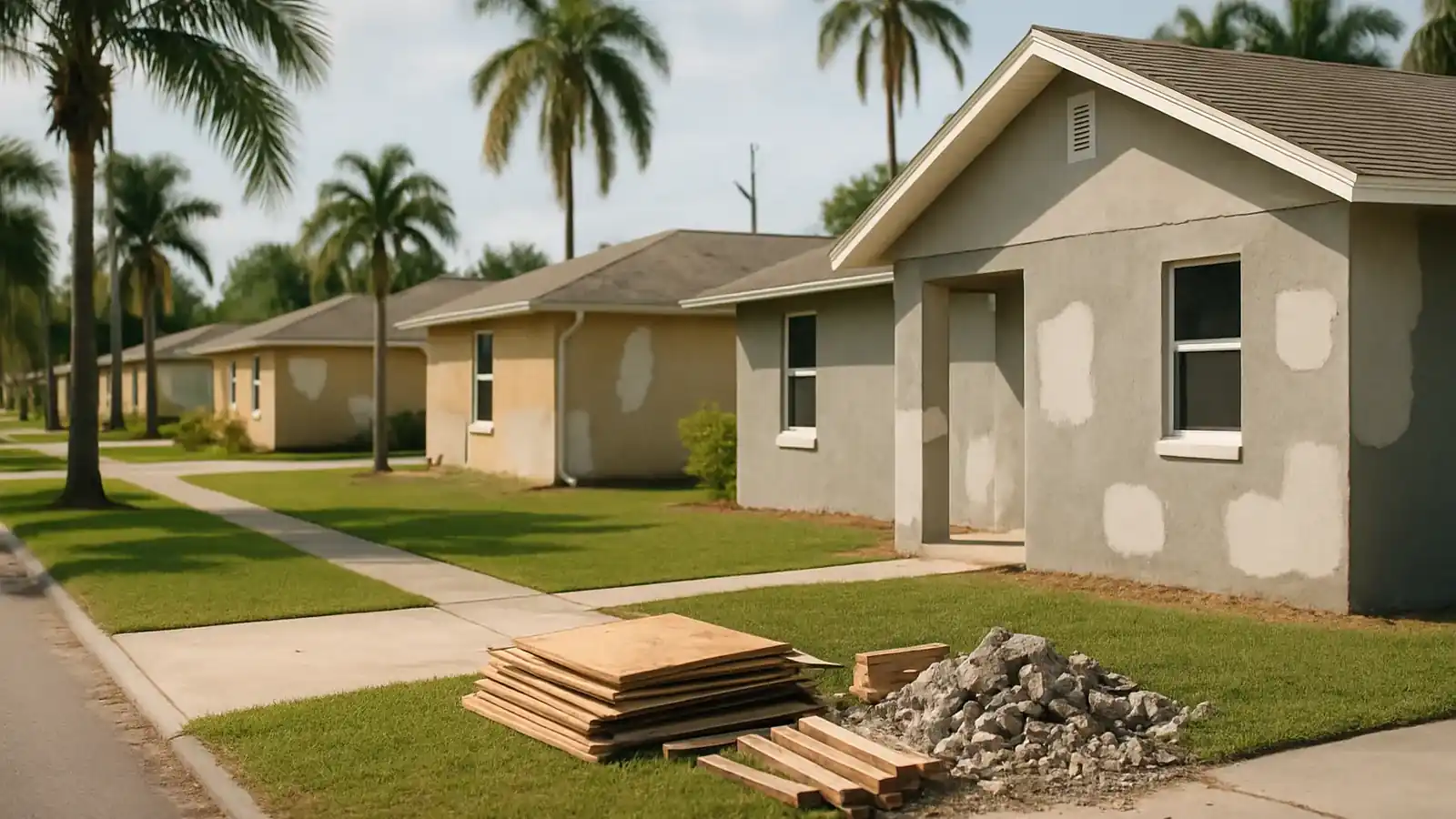
Most Estero mold work lands between $500 and $6,000, set by how far growth spread and whether walls or ceilings must be opened. In a village where most homes went up after 2000, the usual culprit is a tight house whose air conditioning cools without drying. Many local specialists don't charge for the inspection; ask when they call.
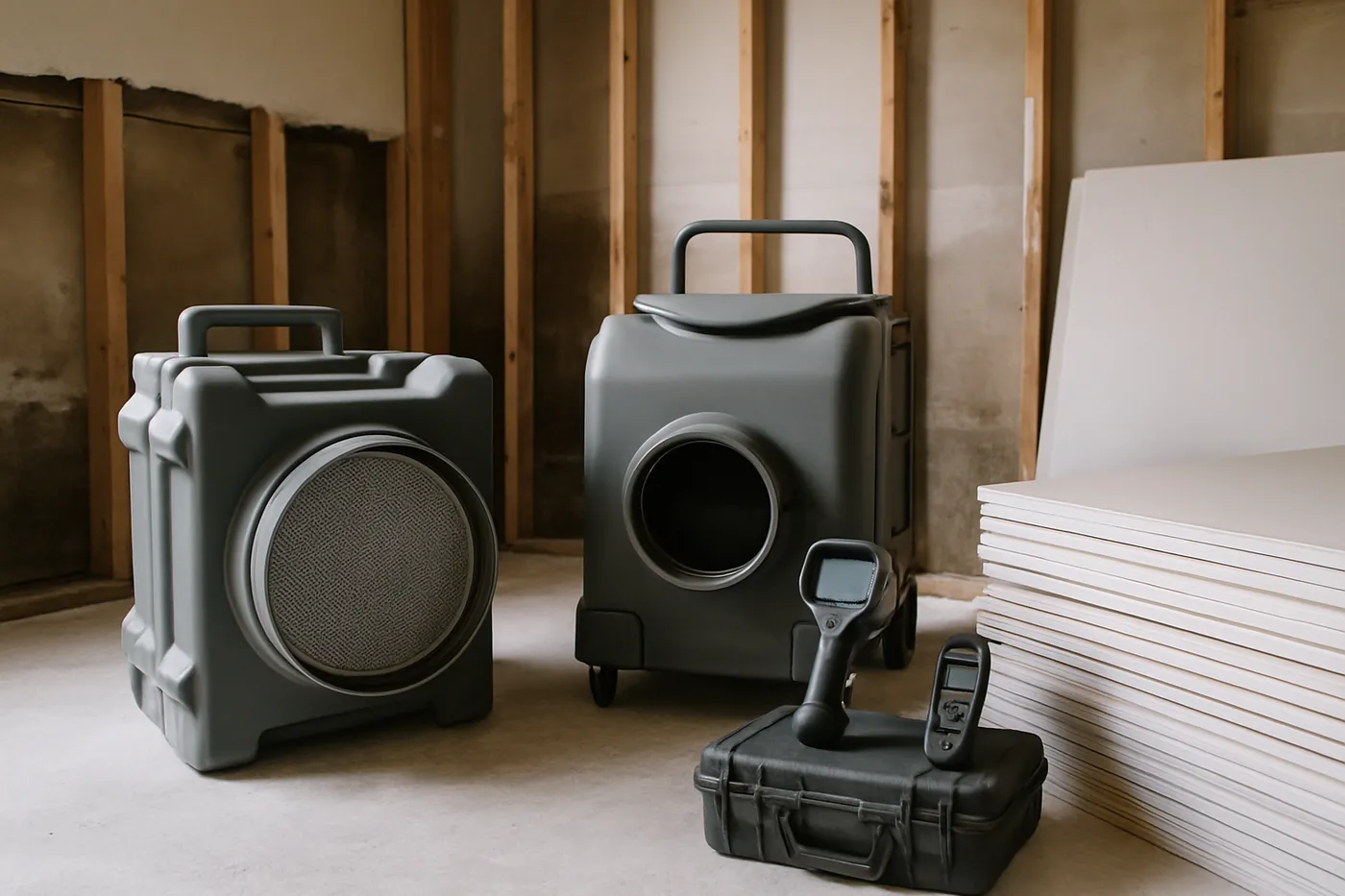
New construction fails differently, not less
Estero grew through master-planned community development, and its housing is overwhelmingly recent. Owners are consistently surprised to find mold in a house a few years old, and the surprise is understandable but misplaced.
Modern Florida homes are built tight. That's excellent for energy performance and unforgiving about moisture: a sealed envelope doesn't let humid air in as readily, and it doesn't let interior moisture out either. Whatever gets inside stays until mechanical equipment removes it, which makes the air conditioning system the entire moisture strategy rather than one part of it.
The oversized-unit problem
Here's where it goes wrong. Oversized air conditioning is common in new construction because larger capacity feels like a safety margin, and for cooling speed it is. For dehumidification it's the opposite: the unit reaches the setpoint quickly and shuts down having removed comparatively little water from the air. The house reads 73 degrees and 65 percent relative humidity: cool enough that nobody investigates, and above the roughly 60 percent threshold where growth is largely arrested.
Homeowners find it as a musty closet, a discolored patch behind furniture on an exterior wall, or growth around a supply register. The correction is usually modest relative to the house: a whole-home dehumidifier operating independently of the cooling call, a humidistat, or a thermostat strategy that favors longer run times.
Builder warranties are worth checking first
Because so much of this housing is recent, findings here sometimes fall inside builder warranty coverage: particularly envelope defects, flashing errors, and bath fans terminating in the attic. Warranty administrators want measurements, photographs, and an identified moisture source rather than a description of a smell, which is exactly what a good written report provides. When a warranty claim is the better path, a fair specialist says so before quoting the work.
A village built mostly after 2000
The Census Bureau's 2020-2024 American Community Survey counts about 26,900 homes in Estero, with a median build year of 2004. More than half were built in the 2000s alone, about 70% in 2000 or later, and fewer than 5% predate 1980. That is the tight, recent housing the sections above describe, which is why oversized AC and builder warranty questions come up so often in Estero inspections.
The Estero River and the village's 50% rule
The USGS gauges both the North Branch and the South Branch of the Estero River at Estero. The village's substantial damage page counts flooring, wall finishes, insulation and cabinets toward its 50% of market value threshold, while cleanup does not count, and it says work in a flood hazard area cannot begin until permits are issued. Its flood FAQ says drywall, carpet and insulation that stayed wet for more than 48 hours should be removed and discarded, and it lists a Class 6 Community Rating System rating.
Asked in Estero
Our house is nearly new. How can there be mold?
Because new houses are built tight, and tight is unforgiving about moisture. A sealed envelope doesn't let interior humidity out, so mechanical equipment is the entire moisture strategy. An oversized AC unit cools fast, shuts off, and never runs long enough to dehumidify: leaving a cool house at 65 percent humidity.
The house is cool but the air feels heavy. What's the fix?
Measure first: a hygrometer under $20 settles it. If humidity runs above about 60 percent, the correction is usually a whole-home dehumidifier operating independently of the cooling call, a humidistat, or a thermostat strategy favoring longer cycles. It's typically the cheapest line and the one preventing recurrence.
Could this be covered by our builder warranty?
Possibly. Particularly envelope defects, flashing errors, and bath fans terminating in the attic. Administrators want measurements, photographs, and an identified moisture source rather than a description of a smell, which is what a good written report provides. If a warranty claim is the better path, a fair specialist says so before quoting.
Is an oversized AC really that common in new homes?
Common enough that it is worth checking routinely. Larger capacity feels like a safety margin and for cooling speed it is. For dehumidification it's the opposite, because shorter run times mean less water pulled from the air. It's why 'the AC works fine' and 'we have a humidity problem' are frequently both true.
When the specialist calls
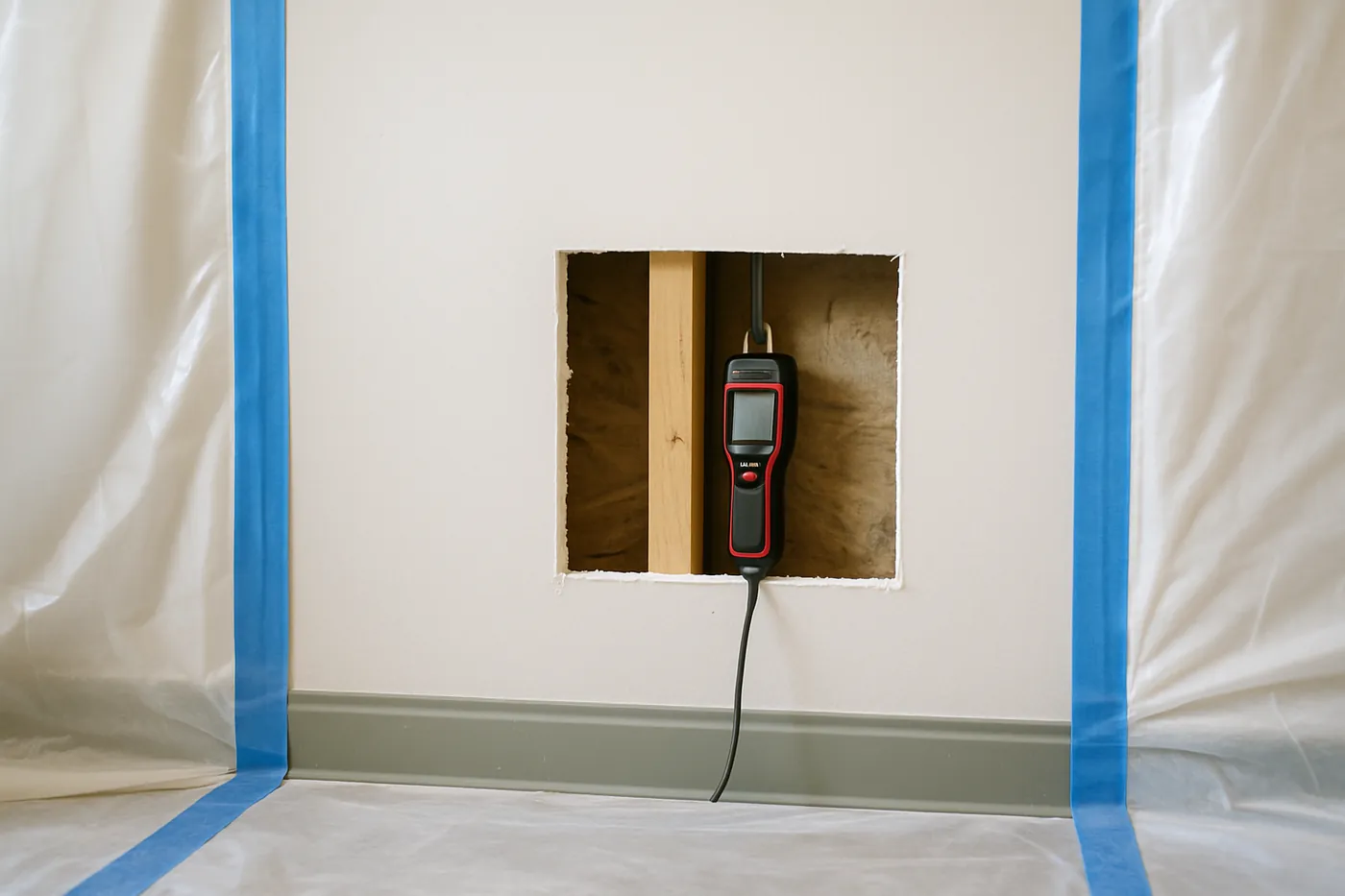
Expect measurements before a price: readings room by room, the indoor humidity, the air handler and its condensate line, and any spot where water gets in from outside. A written, itemized scope should follow, and so should a plain "this needs a dehumidifier, not remediation" if the readings say so. The cost guide and the full service list explain the options.
Get a Fort Myers mold inspection
Tell us what you’re seeing or smelling: a musty room, staining on a wall base, discoloration in the AC closet, humidity that never drops, and we’ll pass it to one independent local specialist who works in Fort Myers. That specialist will call you back about an inspection.