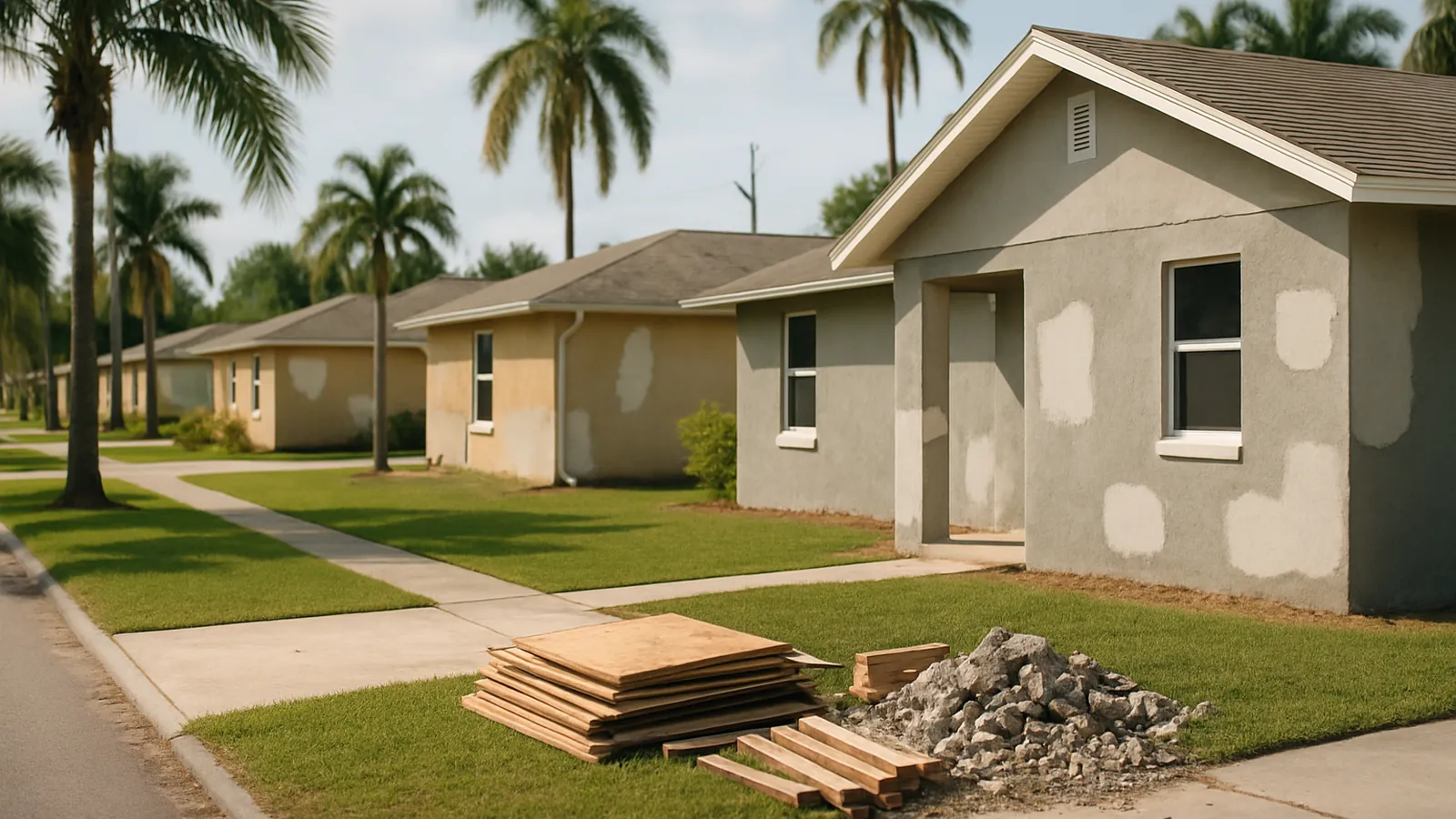
Water damage restoration in Fort Myers runs $1,000–$8,000 for most homes, depending on volume, spread, and material removal. Mold can begin establishing on wet materials within 24 to 48 hours, and southwest Florida's humidity pushes that toward the short end — which is why same-day extraction matters here.
Here's what metered drying involves, and why the drying step is the one that decides everything downstream.
The drying step is where mold jobs are prevented or created
This is the most important thing on this page. Nearly every mold problem we remediate in Lee County exists because water was removed but the structure was never actually dried to a measured standard. Extraction is visible and satisfying — the water is gone, the floor looks fine. The moisture that matters is the moisture still inside framing, sheathing, and the concrete slab, and it is invisible.
Drying is finished when meter readings on affected materials match a dry standard taken from unaffected material in the same building. Not when the fans have run three days. Not when it looks dry. Not when the schedule says the equipment is needed elsewhere. That distinction is worth stating plainly because it is precisely where the shortcut gets taken, and the consequence doesn't appear for months.
What restoration actually includes
- Extraction — standing water removed first, with equipment sized to the volume rather than what's on the truck
- Category assessment — clean, gray, or contaminated water, because it decides what can be saved
- Material triage — what dries in place and what must be removed, decided by meter readings rather than appearance
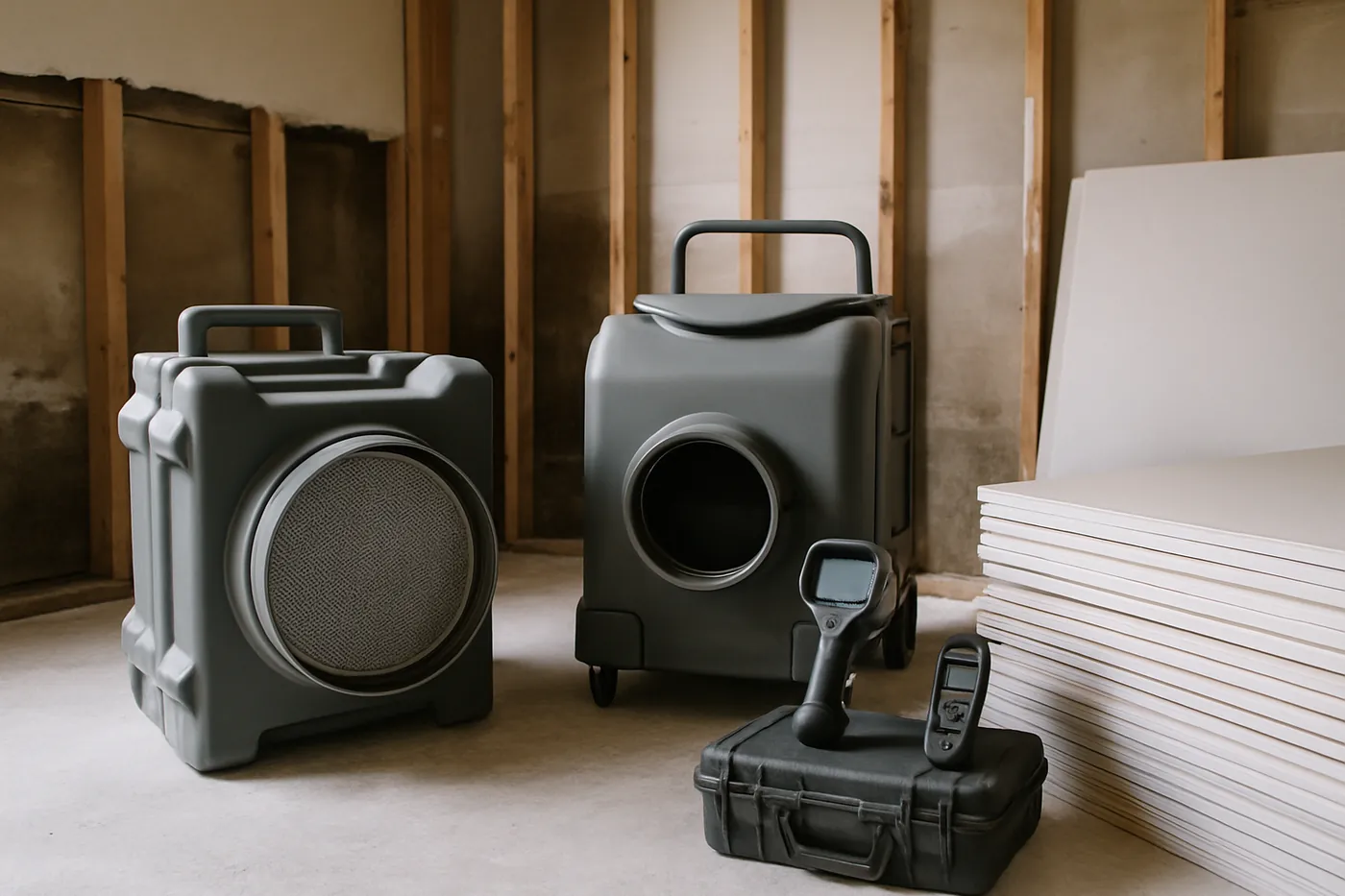
- Structural drying — air movers and commercial dehumidifiers positioned for the actual layout
- Cavity drying — wall cavities, under cabinets, and beneath flooring, which is where household equipment cannot reach
- Daily monitoring — readings logged against the dry standard until they meet it
- Documentation — photographs, readings, cause, and timeline for the claim
Water category decides what can be saved
Volume is what homeowners notice; category is what determines the bill. Clean supply-line water is one situation. Storm water and ground water carry contaminants, which changes the protocol entirely: porous materials that absorbed it generally come out rather than getting dried in place, and the cleanup involves more than moisture removal.
On this coast that distinction comes up every season, and it is worth understanding before you're comparing estimates under pressure. A restoration quote that doesn't state the water category isn't telling you what you're buying — and the difference between categories can be several thousand dollars of material that either stays or goes.
If you're rebuilding, insist on the readings
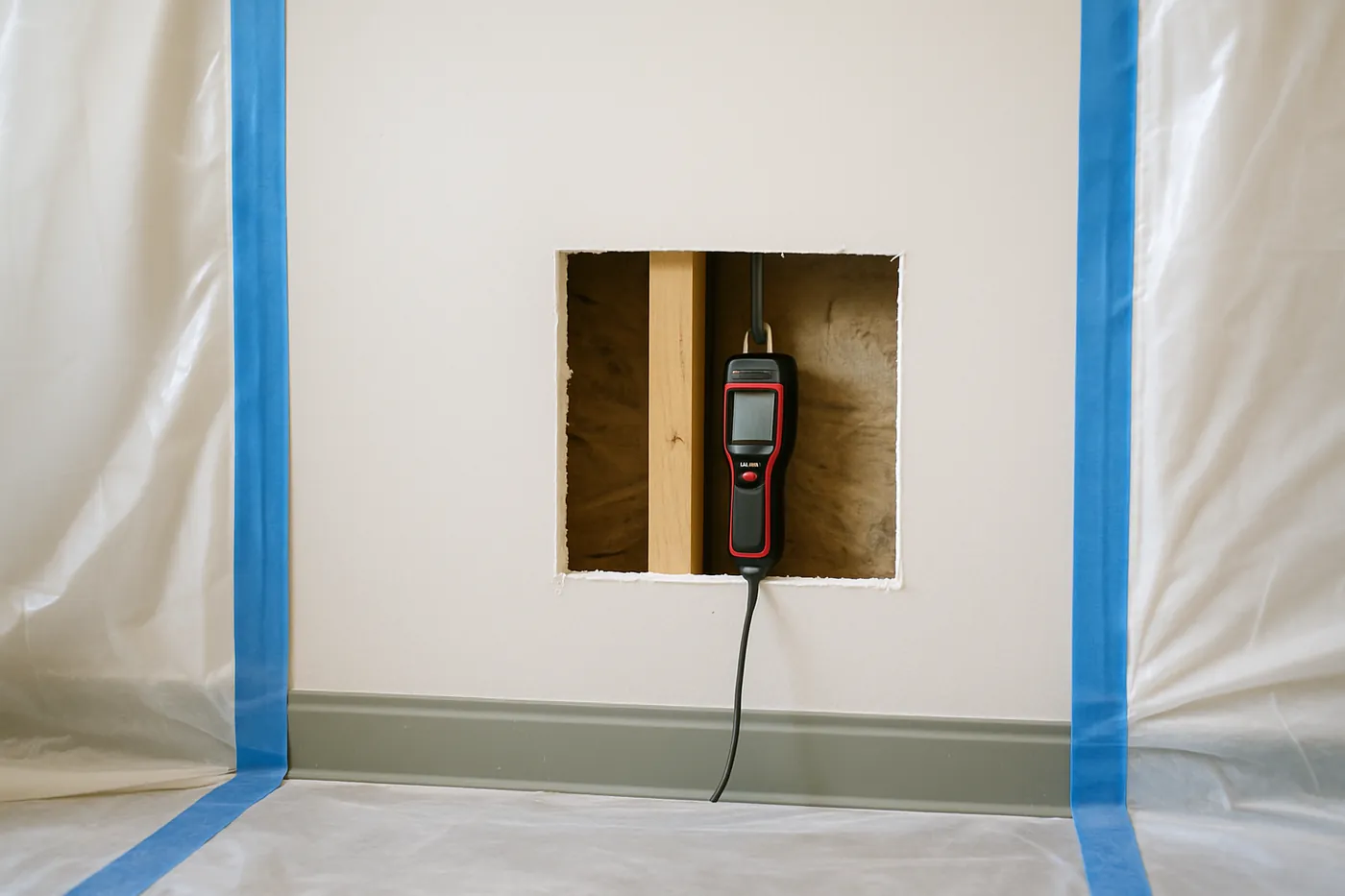
Whoever does your reconstruction, ask for the moisture log before insulation and drywall go in, and ask what dry standard they measured against. It's a reasonable request, it costs nothing, and it is the single check that prevents the sealed-cavity mold that this region has been finding inside repaired homes. A contractor who can produce that log is telling you something real about how they work.
What has to happen in the first 48 hours?
Lee County knows this sequence at scale: the reconstruction after Hurricane Ian is itself a documented source of mold work, because walls closed before framing dried turned drying shortcuts into remediation jobs.
| Situation | What it means | How it goes in this market |
|---|---|---|
| Stop and extract | The source closed and standing water out the same day | In the wet season the source is often still raining — tarp and extract in one visit |
| Dry to a standard | Monitored drying against readings from unaffected material | Wet-season dew points mean open-window drying actively adds moisture here |
| Remove what stayed wet | Saturated porous materials out before they colonise | Block walls dry; the furring, insulation and drywall inside them are what leaves |
| Verify before rebuild | Moisture readings decide closure — never the calendar | The Ian lesson, exactly: verified-dry framing before a single sheet of drywall returns |
If your home was rebuilt quickly after a storm, staining at the base of new drywall is worth investigating early — it is usually the wall reporting what it was closed over.
Water damage questions, straight answers
How fast do I need to act after water gets in?
Same day. The standard guideline is that mold can begin establishing on wet materials within 24 to 48 hours, and southwest Florida's heat and humidity sit at the aggressive end of that window because the surrounding air offers almost no drying capacity. Extraction started immediately is the difference between a drying bill and a remediation bill.
What does water damage restoration cost here?
Most residential jobs run $1,000 to $8,000, driven by water volume, how far it spread, and how much material has to come out. Clean water caught within hours is the low end. Storm or ground water, or water that sat over a weekend, climbs quickly because contaminated porous material can't be dried in place.
How do you know when the structure is actually dry?
Meters, not calendars. We take readings on affected materials at the start and track them daily against a dry standard measured from unaffected material in the same building. Equipment comes out when the numbers say so, and you get the log. A crew pulling fans on a fixed schedule is guessing, and that guess is what creates mold later.
Can't I dry it myself with fans and a shop vac?
For a small clean-water spill caught in the first hour, sometimes. What household equipment cannot do is dry inside a wall cavity, under a slab-laid floor, or behind cabinets — and those are exactly where mold starts. Surfaces feeling dry while the cavity behind them is still wet is the most common path from spill to remediation.
Does insurance cover it?
Sudden accidental water is frequently covered — a burst supply line, a failed appliance, an overflow. Gradual seepage and maintenance issues generally are not, and flood is a separate policy entirely. Florida policies also commonly cap mold coverage at a stated amount. We document cause, timeline, and daily readings in the format adjusters expect.
Get a free Fort Myers mold inspection
Tell us what you’re seeing or smelling — a musty room, staining on a wall base, discoloration in the AC closet, humidity that never drops — and we’ll schedule an inspection with moisture readings and photos. We reply the same business day.